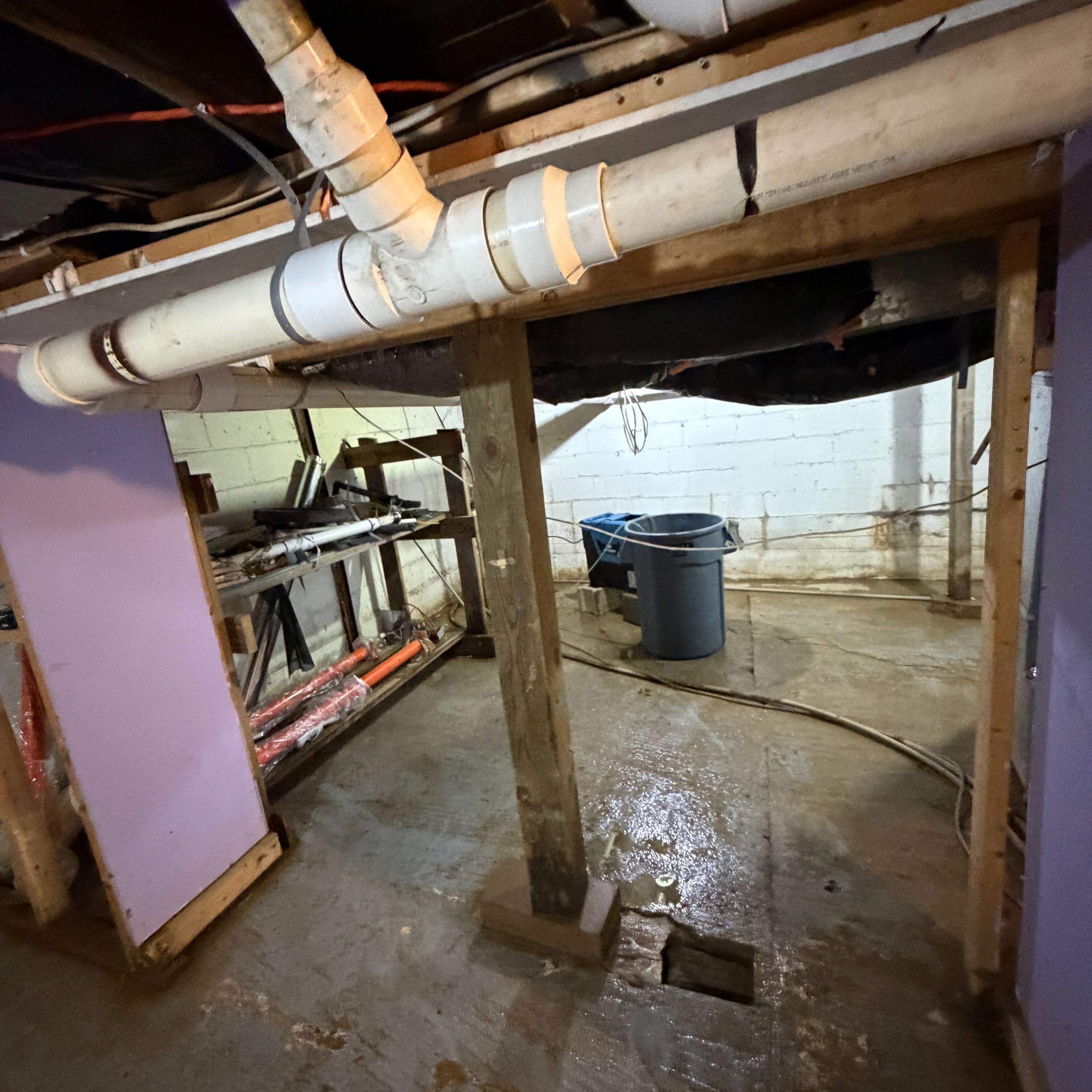
Problem: Mold Started Growing Before You Even Knew There Was Water
Most of the mold calls we get in Hazel Dell are not from people who watched a pipe burst. They are from people who pulled back a piece of baseboard, lifted a rug, or smelled something off and discovered a problem that had been quietly spreading for weeks. Hidden leaks under sinks, slow toilet seal failures, and condensation in crawl spaces all create the exact damp, dark conditions mold needs. By the time you see it, you are looking at the surface of something larger.
Solution: Moisture Mapping and Containment First, Demo Second
We never start with a sledgehammer. Our first move is a moisture map using infrared imaging and pin meters to find every wet pocket inside walls, under flooring, and behind cabinetry. Once we know the actual footprint, we set up containment with 6 mil poly sheeting and negative air pressure so spores cannot ride airflow into clean parts of your home. Only then do we open up materials. Skipping containment is how a kitchen mold job turns into a whole house cross contamination problem, and it is one of the most common mistakes we see when homeowners hire the cheapest bid. If you suspect this is happening to you, our hidden leak detection guide walks through the warning signs in more detail.
Problem: The Wrong Materials Were Dried Instead of Removed
Drywall that has been wet for more than 48 hours, carpet pad exposed to Category 2 or Category 3 water, and insulation that absorbed moisture cannot simply be dried in place. The IICRC S500 and S520 standards are clear on this. Porous materials contaminated with mold or sewage water have to come out. We see homeowners and even some restoration companies try to save these materials to keep the invoice low, and the mold returns within months. The savings on the front end almost always get eaten by a second remediation, replacement flooring, and the cost of living through the project twice.
Solution: Selective Demolition Based on IICRC Categories
Here is how we make the keep or remove call on every material in your Hazel Dell property:
- Category 1 clean water, dry within 48 hours, no visible growth: dry in place with air movers and dehumidifiers.
- Category 2 gray water or wet longer than 48 hours: remove porous materials like drywall, carpet pad, and insulation up to the waterline plus 12 inches.
- Category 3 black water from sewage, flooding, or long term contamination: full removal of all porous materials in the affected zone, with antimicrobial treatment of remaining structure.
This is the same protocol we follow on every job, residential or commercial mold remediation project. The category drives the scope. The scope drives the price. There is no guessing.
Problem: The Air Is Still Contaminated After Demo
Removing moldy material is only half the job. Spores stay airborne for hours and settle on every horizontal surface in your home. If you skip the air phase, you will be cleaning visible dust off shelves and ceiling fans for months while occupants keep reacting. Families with asthma, infants, or elderly residents notice it first, often with symptoms that linger long after the visible mold is gone.
Solution: HEPA Air Scrubbing and Detailed Cleaning
We run HEPA filtered air scrubbers throughout the affected zone for the entire duration of the project, typically 3 to 5 days for a moderate Hazel Dell basement or bathroom job. Once demo is complete, our crew HEPA vacuums every surface, wipes structural elements with an EPA registered antimicrobial, and runs a final air exchange before pulling containment. On jobs tied to sewage backup, the protocol is even more aggressive, which is why our sewage cleanup process includes mold prevention as a built in step rather than an add on.
Problem: The Source Was Never Actually Fixed
We have walked into homes where another company did a beautiful mold remediation, only to have growth return six months later because nobody addressed the original moisture source. A clean room means nothing if the crawl space vapor barrier is torn, the gutters still dump against the foundation, or the dishwasher supply line is still weeping behind the cabinet.
Solution: Source Repair Before Clearance
Before we call a job complete, we verify the moisture source is fixed. That might mean coordinating with your plumber, recommending a sump pump upgrade, sealing a foundation crack, or improving crawl space ventilation. We document moisture readings on framing and substrate before reconstruction so you have proof the structure was dry when the walls closed up. That documentation also matters for insurance, since adjusters in Hazel Dell increasingly ask for psychrometric logs and post remediation verification before approving the rebuild scope.
Problem: Mold Keeps Coming Back in the Same Spot
Recurring mold in the same corner of a basement, under the same window, or in the same closet almost always points to an ongoing humidity or condensation issue rather than a one time water event.
Solution: Long Term Humidity Control
Three things keep mold from returning to a treated Hazel Dell property:
- Keep indoor relative humidity between 30 and 50 percent year round, measured with a hygrometer not guessed at.
- Run a properly sized dehumidifier in basements and crawl spaces from April through October.
- Insulate cold surfaces where condensation forms, especially uninsulated ductwork and exterior wall closets.
These are small investments compared to a repeat remediation bill, which typically runs 1,500 to 6,000 dollars for residential scopes and significantly more for commercial.
Solution: A Seasonal Walkthrough You Can Do Yourself
Twice a year, walk your property with a flashlight and a notepad. Check under every sink for soft cabinet bottoms or water staining. Look at the ceiling below upstairs bathrooms for discoloration. Pull furniture away from exterior walls and feel for cool damp spots. Inspect window sills for condensation lines and peeling paint. In the basement, check around the water heater, washing machine hoses, and any floor drains for residue or rust. Hazel Dell Water Restoration customers who do this seasonal check tend to catch problems at the leak stage rather than the mold stage, and that is the difference between a 300 dollar plumbing repair and a 5,000 dollar remediation.