Problem: Water Has Already Soaked Into the Subfloor
By the time you spot water on your hardwood, it has usually traveled further than you think. Solid oak and engineered planks both wick moisture into the tongue-and-groove joints, then down into the plywood or OSB subfloor beneath. Once the subfloor passes roughly 16% moisture content, drying timelines stretch from days into weeks, and cupping turns permanent.
You will notice early warning signs within hours: dark lines along the seams, a slight crown in the middle of each board, or a hollow tapping sound when you walk across the room. None of those mean the floor is dead, but they do mean the clock started a while ago.
The species of wood matters too. White oak and hickory are denser and tolerate brief exposure better than red oak, maple, or pine. Engineered planks with HDF cores swell faster than solid wood and rarely recover once the core delaminates. Knowing what is on your floor helps us set realistic expectations from the first walkthrough.
Solution: Penetrating Moisture Mapping and Targeted Extraction
The fix is not a shop vac and a box fan. Our crews show up with penetrating moisture meters, thermal imaging, and injection-style drying mats that pull water from under the boards without ripping them up. We map every affected square foot, log baseline readings, and set drying targets to the unaffected wood in your home, usually between 7% and 9% MC for Hazel Dell interiors.
For larger losses we pair extraction with desiccant or low-grain refrigerant dehumidifiers sized to the cubic footage. If the source was a supply line or appliance, our water damage restoration team also documents everything your adjuster will need for the claim. If you are still actively pulling standing water, the steps in our water extraction services guide walk you through what to do in the first hour.
Problem: The Boards Are Cupping, Crowning, or Buckling
Cupping is the edges of each board rising higher than the center. Crowning is the opposite, with the middle bulging up. Buckling is the worst case, where boards pull free from the subfloor entirely. Each one tells you something different about how long the water sat and how saturated the wood is.
- Mild cupping under 1/16 inch often sands flat after full drying.
- Severe cupping or crowning usually requires board-by-board replacement.
- Buckling almost always means the subfloor is compromised too.
Solution: Dry First, Decide Second
Here is the rule we live by: never replace hardwood until it has been dried to equilibrium. We have seen homeowners in Hazel Dell tear out 800 square feet of oak that would have flattened on its own with another 10 days of controlled drying. We have also seen people wait six weeks hoping for a miracle while mold colonized the subfloor.
Our process is straightforward. We dry the assembly to target MC, monitor for 72 hours of stability, then assess for cosmetic damage. Sanding and refinishing handles light cupping at roughly $3 to $8 per square foot. Full replacement of a damaged room runs $12 to $25 per square foot in Central Indiana depending on species and finish. Drying first costs less than both and tells you which path is real.
Patience pays here. Wood is a living material, and it will continue to release moisture and reshape itself for weeks after the visible water is gone. A floor that looks rough at day 10 often looks dramatically better at day 21 once the cells have stabilized and the grain has settled back toward its original geometry.
Solution: Inspect, Contain, and Remediate
If we find active growth during drying, we contain the area with poly sheeting, set negative air with HEPA filtration, and remove the affected boards in controlled sections. Skipping this step to save a few hundred dollars turns into a five-figure mold job later. It is not worth it, and any honest contractor in Hazel Dell will tell you the same.
Hazel Dell Water Restoration approaches every hardwood loss the same way: measure first, dry aggressively, and replace only what the data says cannot be saved. That sequence protects your floors, your budget, and the indoor air quality of the home your family lives in every day.
Problem: Mold Is Starting Underneath
Hardwood that stays wet past 48 to 72 hours starts growing mold on the underside and along the subfloor. You will not see it from above until it is bad. A musty smell, allergy flares, or dark staining bleeding up through the finish are late signals.
Finished hardwood is deceptive because the top coat of polyurethane traps moisture inside the plank. A floor can feel dry to the touch while the underside reads 25% MC and grows visible colonies within a week. This is why surface inspection alone never tells the full story.
Solution: Honest Category Assessment Before Drying Starts
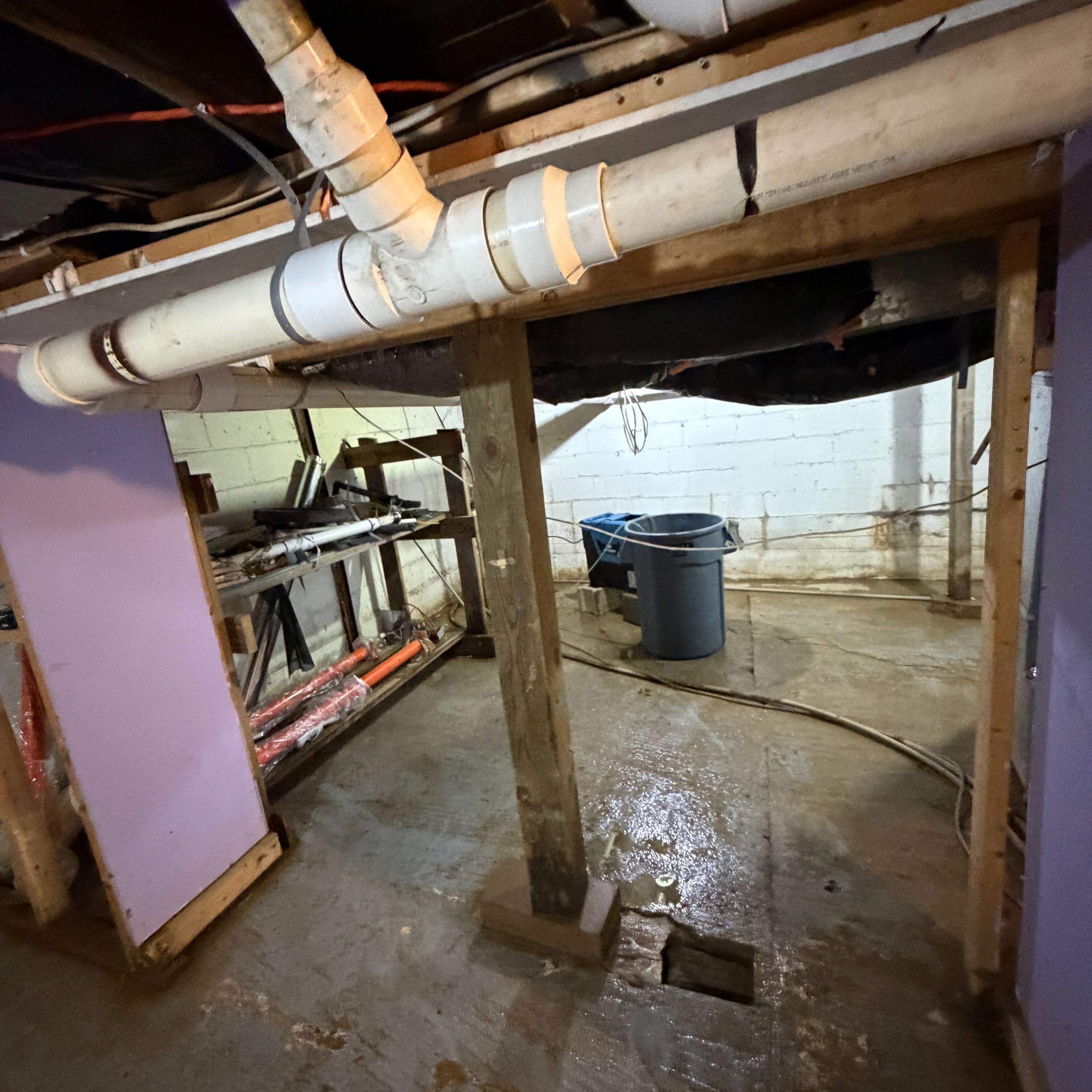
We test, we document, and we tell you the category before we run a single fan. If the loss is Cat 1 from a clean supply line, drying is the play. If it is Cat 3 from a sewer line or a flooded basement that backed up through the floor, the affected hardwood comes out, the subfloor is treated or replaced, and we move into remediation. Our sewage cleanup service handles the contaminated removal safely and within IICRC S500 protocols.
Problem: The Water Was Not Clean
Source matters enormously. A dishwasher supply line is IICRC Category 1 clean water. A sewage backup is Category 3 black water, and hardwood that has absorbed Cat 3 cannot be saved under industry standards, no matter how good it looks on top. Storm runoff and toilet overflows fall into the contaminated range as well.
Time also degrades category. Clean water that sits for more than 48 hours can degrade to Category 2 as bacteria from the subfloor, pet dander, and household debris colonize the wet material. That is one more reason fast response changes outcomes.